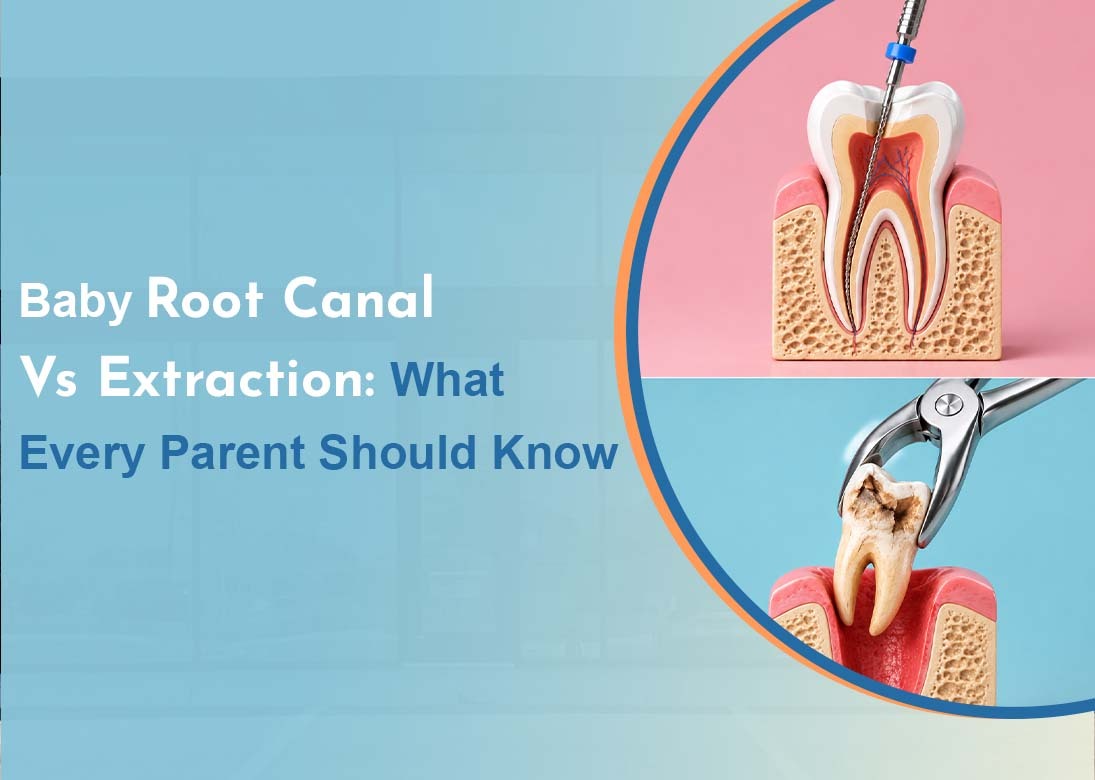
When a child has a deep cavity, pain, or swelling, parents may need to choose between saving the tooth and removing it. The right answer in a baby root canal vs extraction decision depends on the damage, the tooth’s remaining time, and the X-ray.
A baby root canal keeps the tooth after cleaning the unhealthy area inside it. An extraction removes it completely. The better choice is the one that stops pain and protects the developing smile.
Both treatments address a badly damaged or infected baby tooth. A baby root canal cleans inside the tooth and keeps it in position. A basic tooth extraction removes the tooth when it cannot be repaired safely.
Baby teeth help children chew, speak, and guide adult teeth into place. Keeping a repairable tooth can be useful when the adult tooth is still years away.
Still, “save baby tooth or pull it” is not a one-rule decision. The American Academy of Pediatric Dentistry advises considering whether the tooth can be repaired, its value, and available alternatives.
Enough strong tooth must remain to support a lasting repair. After cleaning, a pediatric dental crown may protect the weakened tooth. Saving it may not be dependable when little healthy structure remains.
A younger child may need a back baby tooth for several more years. Baby tooth nerve treatment can preserve chewing and spacing. Removal may make more sense if the tooth is already loose and close to falling out.
The tooth may be saved when the damaged area can be cleaned and sealed. Dr. Danny can use an exam and pediatric digital X-rays to explain how deep the problem reaches and whether saving the tooth is realistic.
Removal may be safer when the tooth is badly broken or cannot hold a crown. Trying to save a tooth that cannot be rebuilt may lead to more pain and another treatment later.
If the tooth is very loose and the adult tooth is close to appearing, removal may solve the problem without keeping an unhealthy tooth longer than needed.
Extraction may be needed when swelling returns or the problem has spread beyond the area that can be cleaned. Seek pediatric emergency dental care for facial swelling, fever, pus, or worsening pain.
A baby tooth may sometimes block an adult tooth that is trying to appear. The dentist should confirm its position before recommending removal.
The dentist considers the child’s age, the tooth involved, remaining healthy structure, infection, and how soon the adult tooth should appear. The complete plan matters too. Saving the tooth may require a crown. Removal may require space maintenance, although not every extraction needs it.
For example, a repairable back tooth in a four-year-old may be worth saving because it is needed for several years. A badly broken, loose tooth in an older child may be better removed when the adult tooth is almost ready.
Dr. Danny helps parents compare these details rather than deciding from one symptom alone.
The mouth may stay numb briefly. Prevent lip or cheek biting and offer soft foods until feeling returns. Mild soreness can occur. Careful brushing and follow-up visits help the dentist check the tooth and crown.
The child may bite gently on gauze to control bleeding. Soft foods and careful cleaning support healing. The dentist will decide whether a space holder is needed based on the missing tooth and adult tooth timing.
Children who feel worried or cannot sit comfortably may be assessed for pediatric sedation.
Before choosing a baby tooth root canal or extraction, ask:
1. Can this tooth be repaired?
2. When should it naturally fall out?
3. What does the X-ray show?
4. What happens if we wait?
5. Will saving it require a crown?
6. Will removal require a space holder?
7. What should we expect during recovery?
8. Why is this choice best for this tooth?
These answers clarify the full child tooth infection treatment plan.
Call promptly for facial or gum swelling, fever with tooth pain, pus, pain that wakes the child, worsening discomfort, trouble chewing, or refusal to eat. Do not wait for an infected baby tooth to fall out on its own.
A baby root canal is not always the best pediatric tooth extraction alternative, and removal is not always the simplest long-term answer. Save the tooth when it can remain healthy and useful. Remove it when damage or infection makes keeping it risky. An exam and X-ray provide the safest direction.
Glow Pediatric Dentistry gives families clear, child-focused guidance when a baby tooth is painful or infected. Dr. Danny explains the X-ray, compares saving and removing the tooth, and helps parents understand crowns, space holders, comfort options, recovery, and follow-up care before they make an informed treatment decision together with confidence.
A baby root canal may be worthwhile when the tooth can be repaired and must remain for several years. It can stop pain, support chewing, and hold space for the adult tooth. The dentist should confirm the tooth has a good chance of lasting.
Both treatments use numbing to keep the child comfortable. Soreness afterward is usually temporary and depends on the tooth, infection, and procedure. Ask how comfort will be managed during treatment and what pain relief is suitable afterward.
No. A space holder may be recommended when a back baby tooth is removed well before the adult tooth is ready. The decision depends on the missing tooth, available space, the child’s age, and what the X-ray shows.
An untreated infection can spread into the gum and bone around the baby tooth, close to the developing adult tooth. Early care helps limit damage, relieve pain, and protect the area while the adult tooth continues to form.
Waiting can allow pain, swelling, infection, and tooth damage to worsen. A tooth that could have been repaired may later need removal. Seek prompt care for ongoing pain, a gum bump, facial swelling, fever, or trouble eating.