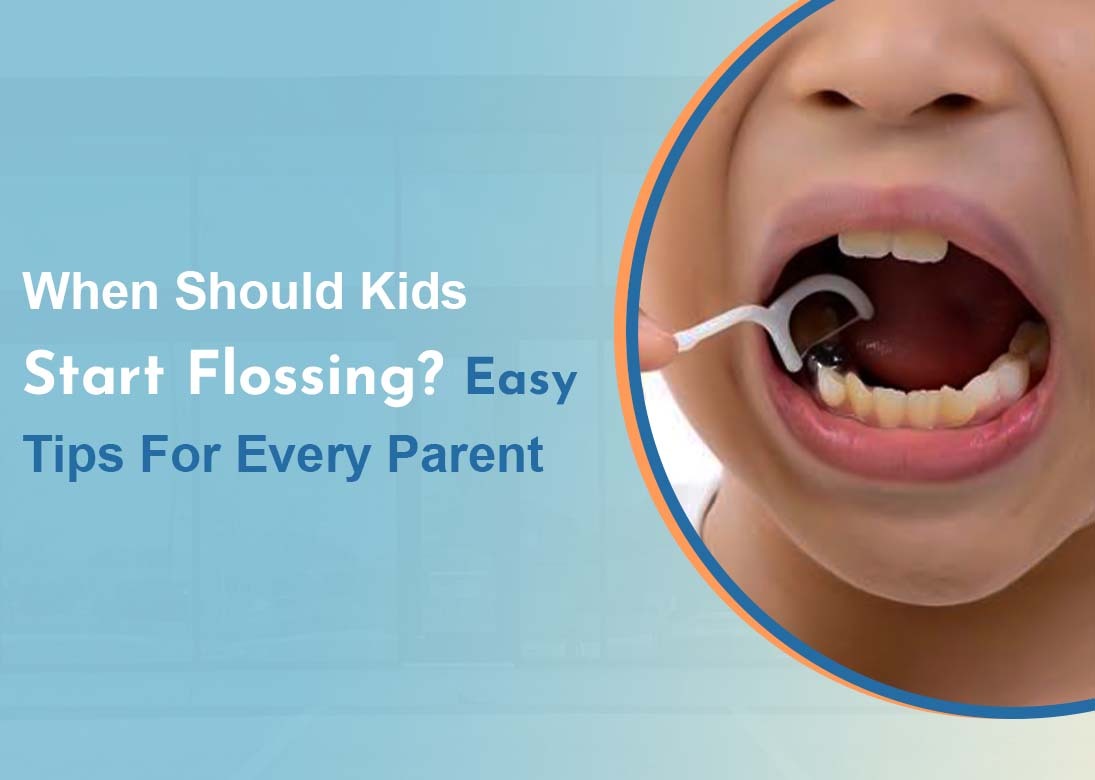
Parents often wait for a certain birthday before adding floss to the routine. The better sign is whether any teeth touch. So, when should kids start flossing? Begin when two teeth sit close enough that a toothbrush cannot clean between them. This often happens around age two or three, but every child develops differently.
Start flossing when two teeth touch. You do not need to floss every open gap in a toddler’s mouth. Focus on close spaces, especially between the back teeth.
Some toddlers have wide gaps while others have crowded teeth. Use good lighting and look for spaces where you cannot clearly see between the teeth. During an infant dentistry visit, Dr. Danny can show parents which areas need attention and demonstrate a comfortable position.
Not every toddler needs every space flossed. If teeth are widely spaced, brushing may reach those areas. Once two teeth touch, clean between them daily. Ask your child’s dentist to check any space that is hard to see.
A toothbrush cleans visible surfaces, but its bristles cannot fully enter tight spaces. Food and sticky buildup may remain between touching teeth even when the smile looks clean.
Daily flossing for kids completes the job brushing starts. The American Dental Association’s flossing guidance recommends cleaning between teeth once a day. Pairing flossing with brushing and preventive dentistry visits supports better kids dental hygiene.
For a toddler, let the child rest their head in your lap. For an older child, stand behind them while facing a mirror. Use good lighting, move the cheek aside gently, and begin with the easiest touching space.
Never snap floss downward. If only three spaces touch, floss those three. A short routine is better than forcing a long session.
String floss gives parents more control but can be difficult inside a small mouth. Floss picks are easier to hold and may work well for toddler flossing.
Waxed floss may slide through tight spaces more easily. A water flosser can suit some older children, especially those with braces, but it requires control and does not replace careful cleaning.
Choose the tool you can use gently and consistently. Dr. Danny can help parents compare options when a child has tight spaces, braces, or trouble with string floss.
Floss once daily at a predictable time. Bedtime works well, but morning is fine when your child is calmer. Flossing before brushing can help you remember both steps, although consistency matters more than order.
Make the child flossing routine easier:
Parents who need hands-on support can ask about hygiene education during the next visit.
Young children often lack the hand control needed to clean every side. They can practice, but an adult should check missed spaces.
Many children need help until around age ten, although readiness matters more than age. A child may be ready when they can reach the back teeth, curve floss around both sides, avoid snapping it, and complete the routine without skipping areas.
Let your child hold the flosser, watch you floss, or practice on a toy. During the first few nights, clean one easy space and stop. Add more as the child becomes comfortable.
Offer small choices such as, “Blue flosser or green flosser?” Choices give children control without making flossing optional.
If flossing hurts, check your pressure and never force floss through a tight space. A regular dental checkup can show why floss catches, shreds, or causes discomfort.
Common mistakes include waiting until all baby teeth arrive, snapping floss into the gums, cleaning only one side, and skipping the back teeth.
Do not floss only when food is visible. Tight spaces can hold buildup that parents cannot see. Do not expect a preschooler to complete the job alone. Practice helps, but adult follow-through keeps the routine effective.
Avoid using flossing as punishment. Calm repetition builds better cooperation.
Ask the child’s dentist for guidance if flossing repeatedly causes pain, the gums keep bleeding, floss will not pass, or it shreds in the same spot. Ongoing bad breath, swelling, or a rough tooth edge should also be checked.
A dentist can demonstrate how to floss children's teeth and identify whether the issue is technique or a tight space.
The answer to when should kids start flossing is simple: begin when two teeth touch, not on a fixed birthday. Start with tight spaces, use a comfortable tool, and clean once daily. Keep helping until your child can reach every area correctly. Small, calm steps can make flossing part of kids dental hygiene.
Glow Pediatric Dentistry helps parents turn daily care into simple, child-friendly habits. Dr. Danny can show families how to position floss, choose an age-appropriate tool, and clean tight spaces gently. During regular visits, the team can spot areas parents may miss and offer practical guidance based on each child’s needs.
Toddlers should floss once daily wherever two teeth touch. Open gaps may not need flossing yet. Focus on tight spaces, use gentle pressure, and ask the child’s dentist to confirm which teeth should be included.
Start with one easy space, keep the session brief, and offer simple choices such as the flosser color or song. Let the child watch you first, then add more spaces gradually without turning the routine into a fight.
Floss picks can be easier in a toddler’s small mouth, while string floss gives parents more control and a clean section for each space. The better choice is the tool you can guide gently around both sides of every touching tooth.
A small amount of bleeding may happen when flossing begins, especially if the area has not been cleaned regularly. Use gentle pressure. If bleeding, pain, redness, or swelling continues, arrange a dental checkup.
Children can practice early, but many still need adult help until about age ten. They are ready when they can reach back teeth, clean both sides of each space, avoid snapping the floss, and follow the routine consistently.